

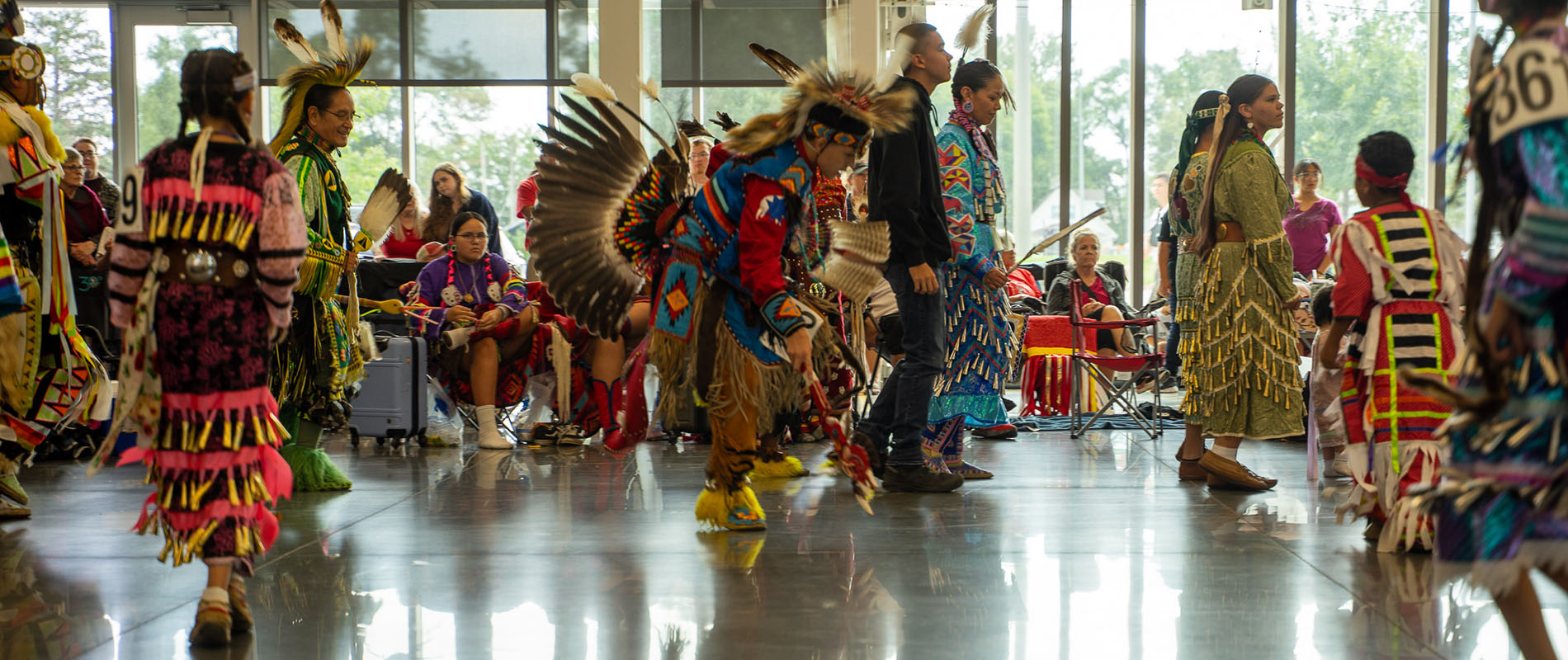





A “celebration of life” brought members of Native American communities together at the Fort Omaha Campus on Saturday, Sept. 12, for the 35th Annual Fort Omaha Intertribal Powwow.
The Fort Omaha Campus is part of a pivotal chapter in U.S. history — one that helped establish the legal rights of Native Americans. In 1879, Ponca Chief Standing Bear and members of his tribe were detained at the fort after leaving their reservation. The case that followed ultimately recognized Native Americans as persons under U.S. law and established their right to seek habeas corpus.
More than a century later, the fort once again served as a gathering place for Native American communities — this time as a place to celebrate culture, strengthen connections and share traditions with the next generation.
While the powwow has historically taken place on the Parade Grounds, this year’s event was moved indoors to Building 24 due to a rain forecast.
“A change in location does not change the spirit of this day, ever. We are here, we are together and we are ready to celebrate,” said Dr. Cynthia Gooch-Grayson, MCC associate vice president of Access, Opportunity and TRIO Programs.
The day began with an opening prayer and flag song before dancers entered the arena for the intertribal dance.
“Every dancer brings their own dance style, their own customs, traditions, culture and language, which explains specifically who we are as tribal people,” Tamayo said.


Leading the procession and celebration were Head Man Louis Antoine of the Sicangu/Lakota and Head Lady Dancer Noni Stabler of the Umónhon. Bringing rhythm and chants were the Dakota Boys, who hosted the Northern Drum, while the Omaha Rough Riders served as the Host Southern Drum.
The powwow also offered opportunities to experience Native American culture beyond the dance arena. Booths featuring traditional wares were set up throughout the building’s two floors. Two educational sessions explored traditional arts, including a flintknapping demonstration led by Alex Ex of the Wiinik Maya tribe and a porcupine quilling workshop led by Charlos Sandoval of Umónhon/Lakota ancestry.
The Bluebird Cultural Initiative led the Tiny Tots special, which welcomed children ages 6 and younger into the dancing arena to experience the circle. At the end, the children received small bags of sweets. Tamayo said the activity helps teach children about balance and reciprocity.
“You give to the circle, and the circle gives back,” he said.
Throughout the event, tribal princesses greeted family and friends and danced in the circle. Tribal princesses, some as young as 12, are selected each year to represent their clans across the nation and around the world.
“These young ladies are really courageous because it’s not easy to get up in front of thousands of people and talk about where you came from,” said Julia Wolfe, who has held seven different powwow princess titles.
Wolfe said speaking in front of the crowd can be challenging because the young women must share parts of their ancestry that aren’t part of their everyday lives, including their Native names, what those names mean and who gave them their names.
“A lot of times our traditions aren’t emphasized, and we lose some of that,” Wolfe said. “That’s why I’m glad we are here today ... this allows us to restore what we do have left and pass it on to the next generation.”