
From MCC classroom to outer space: Student experiment reaches International Space Station

Savannah Behrends
Copywriter and features editor | November 4, 2026




Three MCC students witness their research project launch into orbit, gaining an unforgettable experience at Kennedy Space Center.
The clouds lit up as the rocket's boosters ignited, sending vibrations through the air and a science experiment developed in a Metropolitan Community College classroom lifting off toward the International Space Station (ISS).
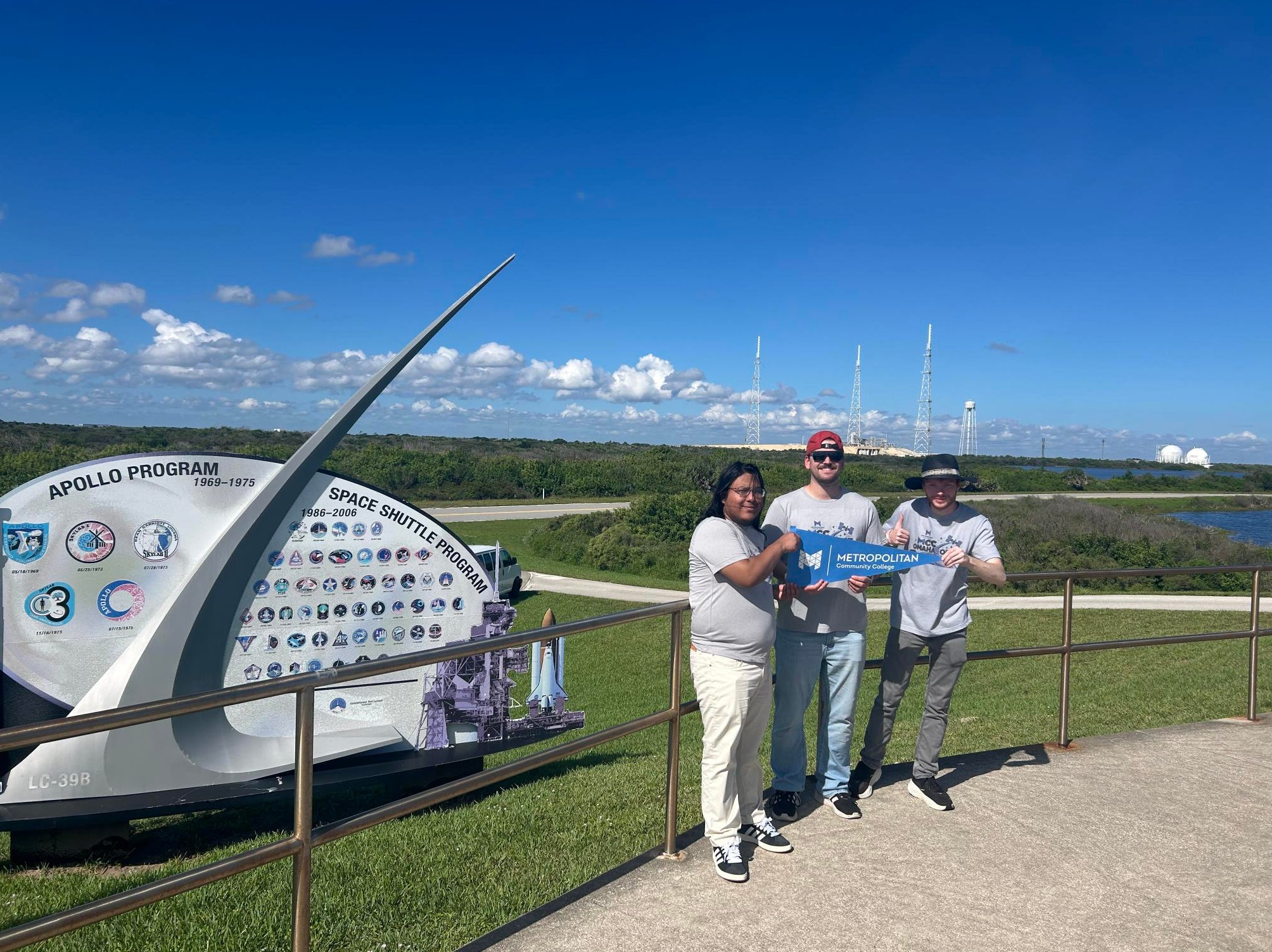
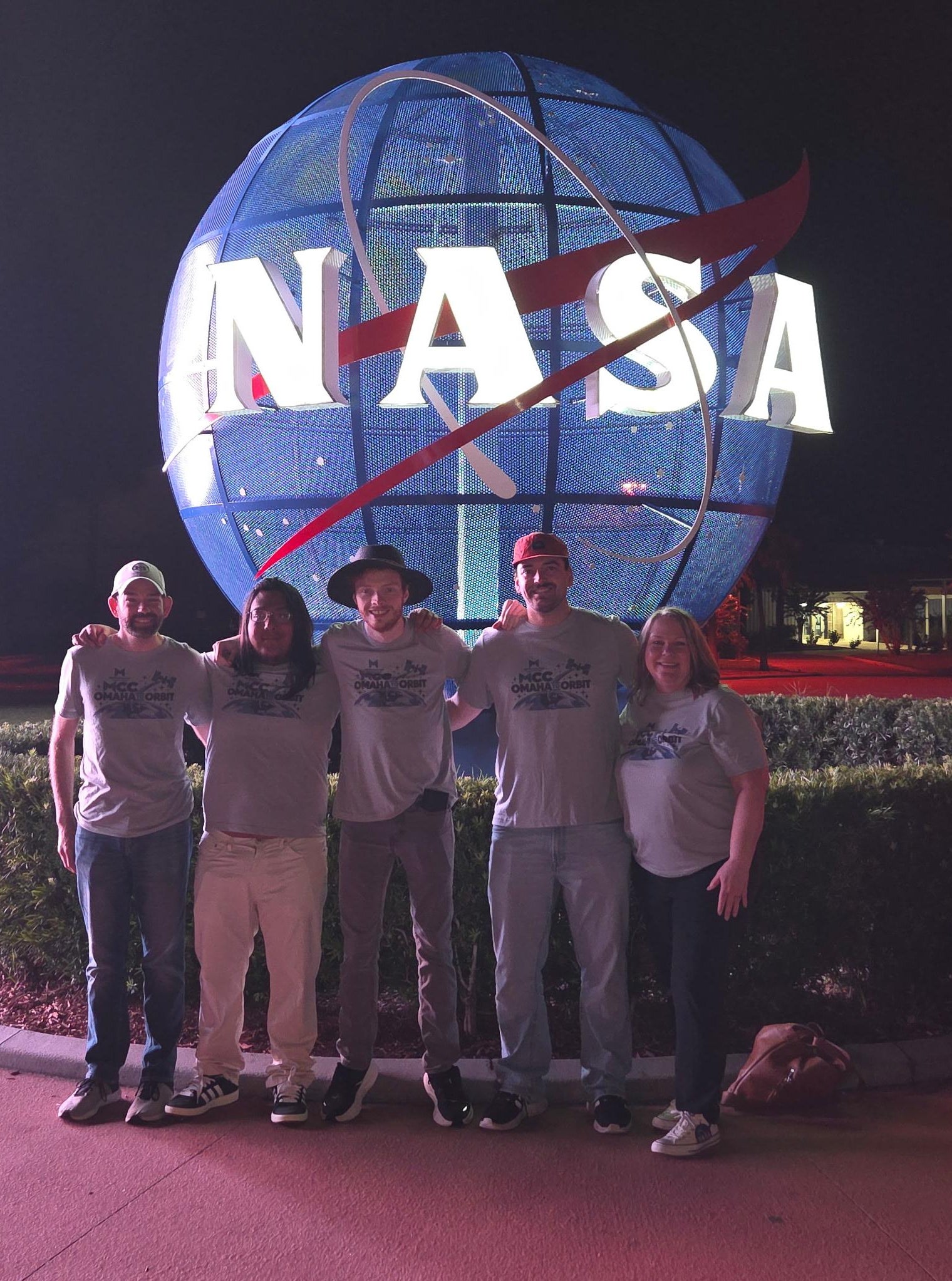
For MCC alums Eric Tomjack and Nikoli Vanosdall, and current student Alvaro Gonzalez-Cruz, watching their research project leave the launch pad at Kennedy Space Center in Florida was the culmination of nearly a year of planning, collaboration and anticipation.
"You see videos of rocket launches online. You're like, oh, that's cool. But it's so much better seeing it in person and you can actually watch the clouds light up from the boosters and feel the vibrations in the air from the takeoff," Tomjack said. "It makes it even better knowing that something that you touched and you worked on is on that rocket."
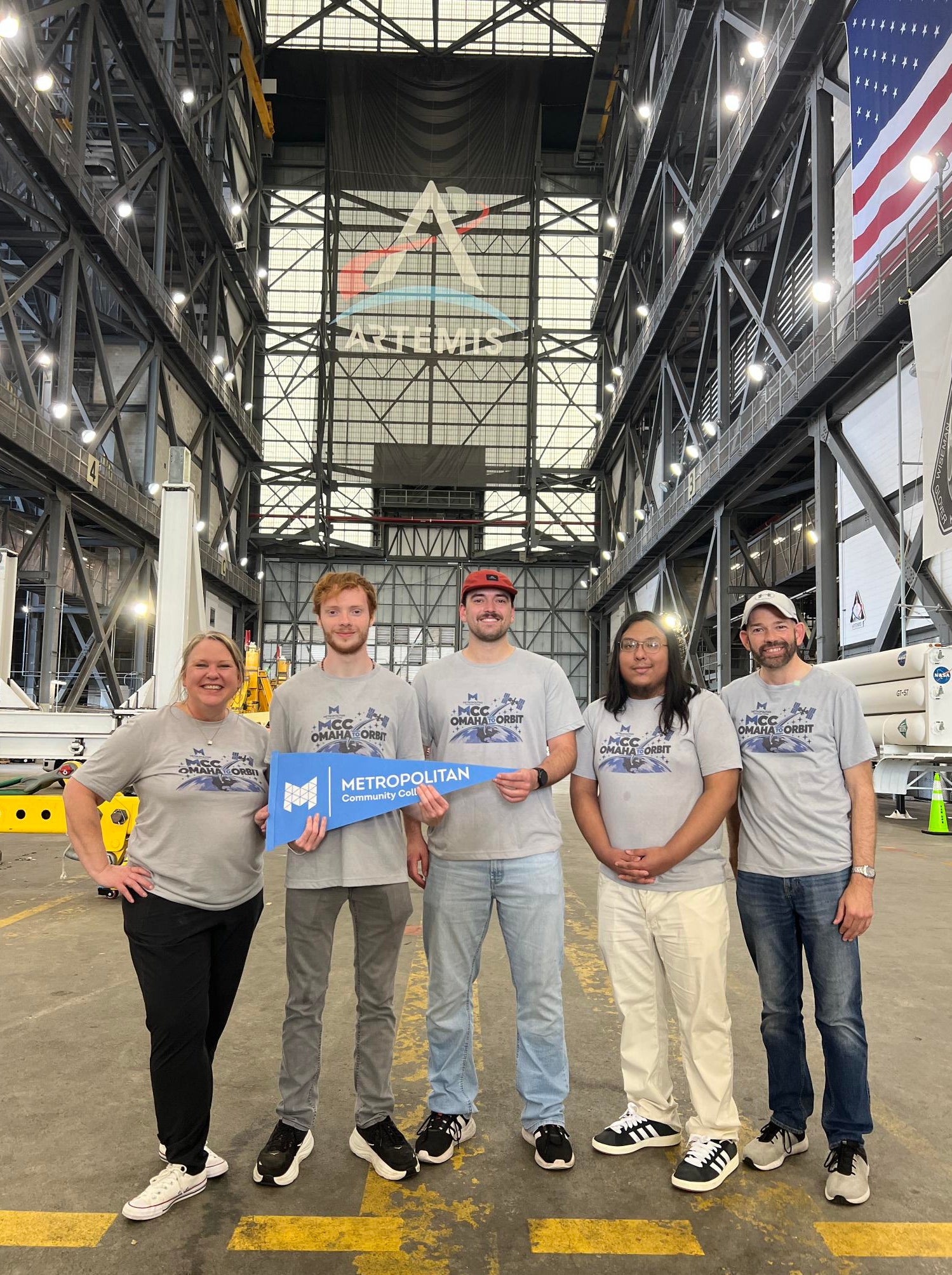
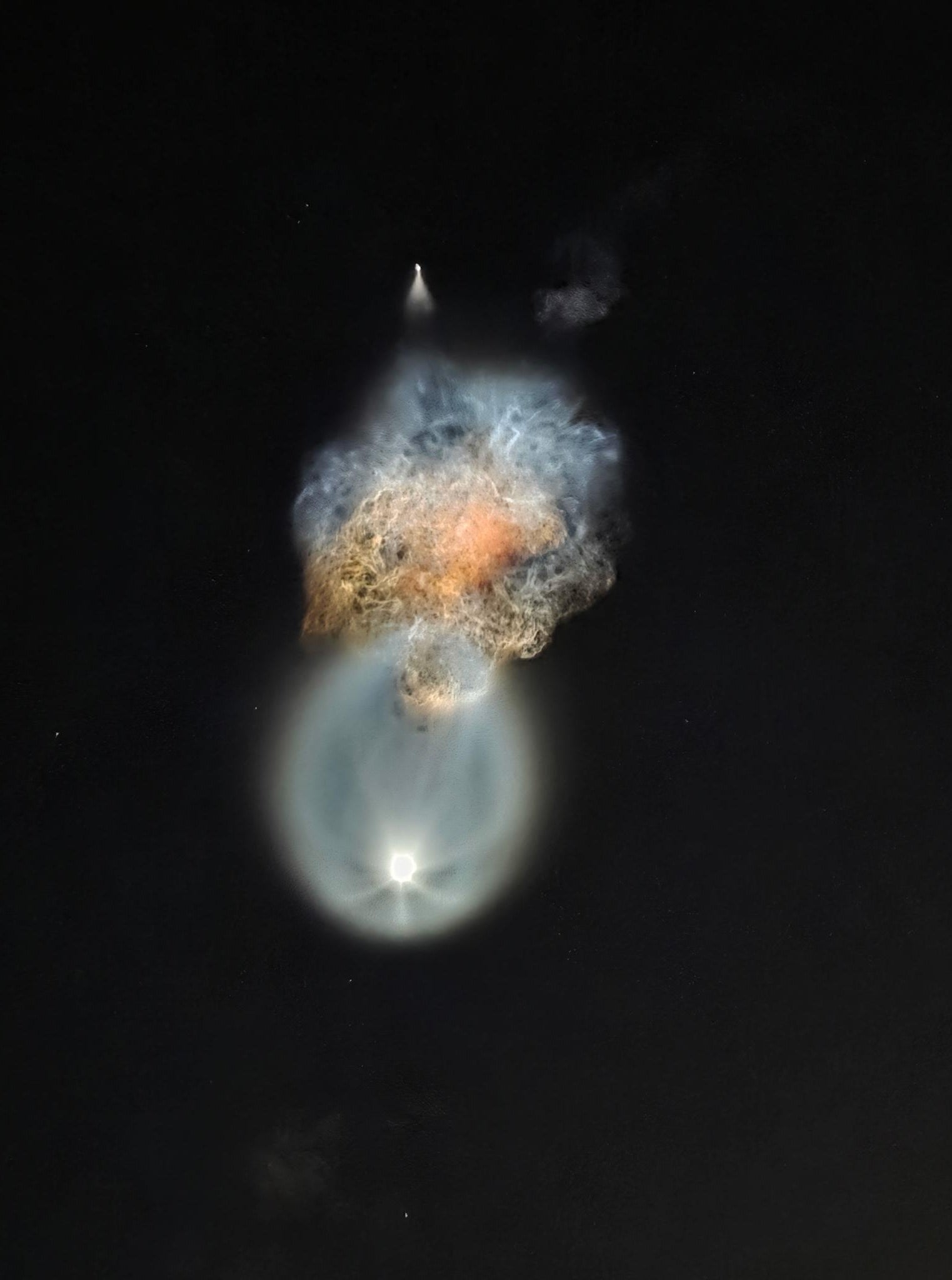
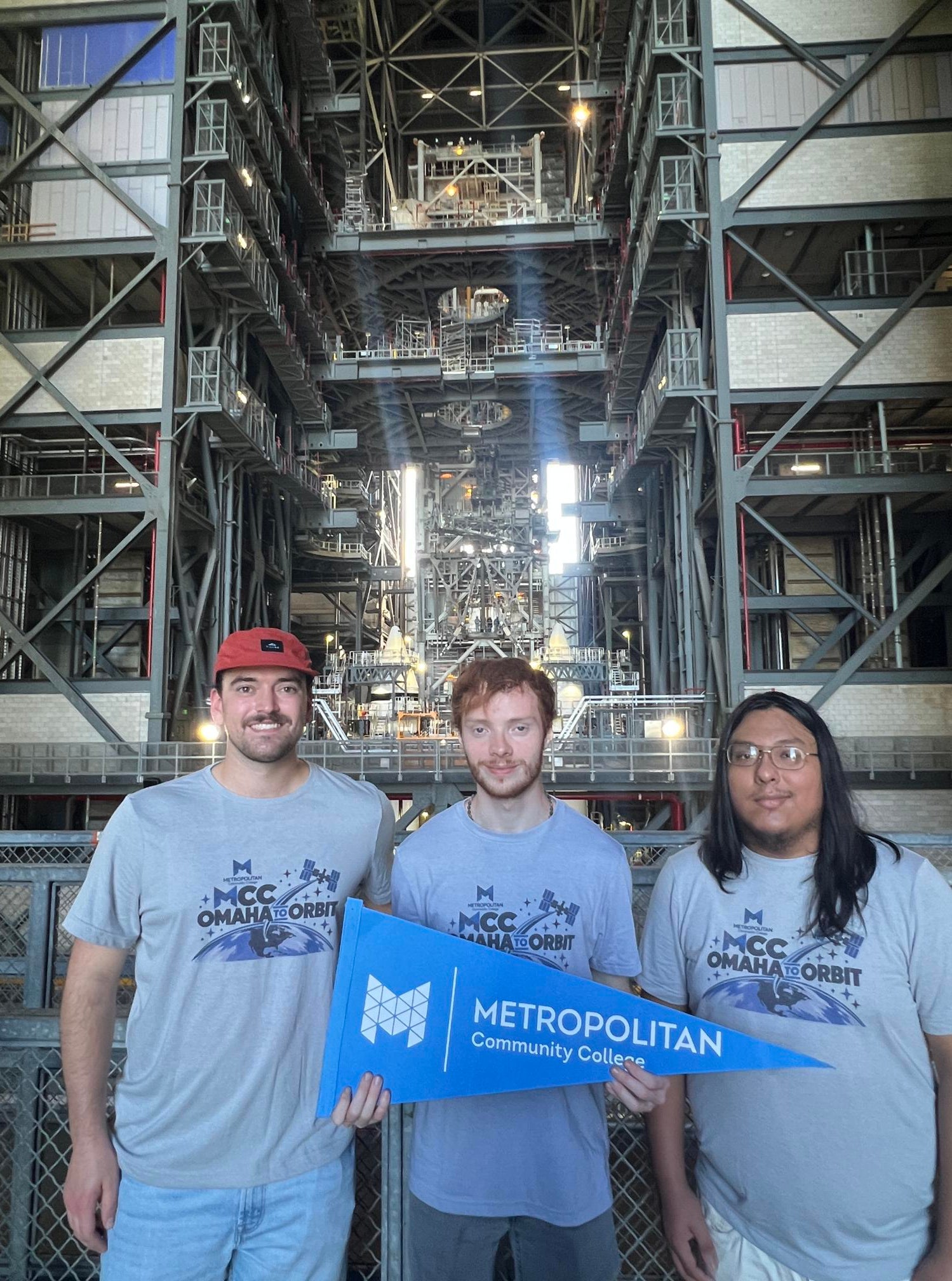
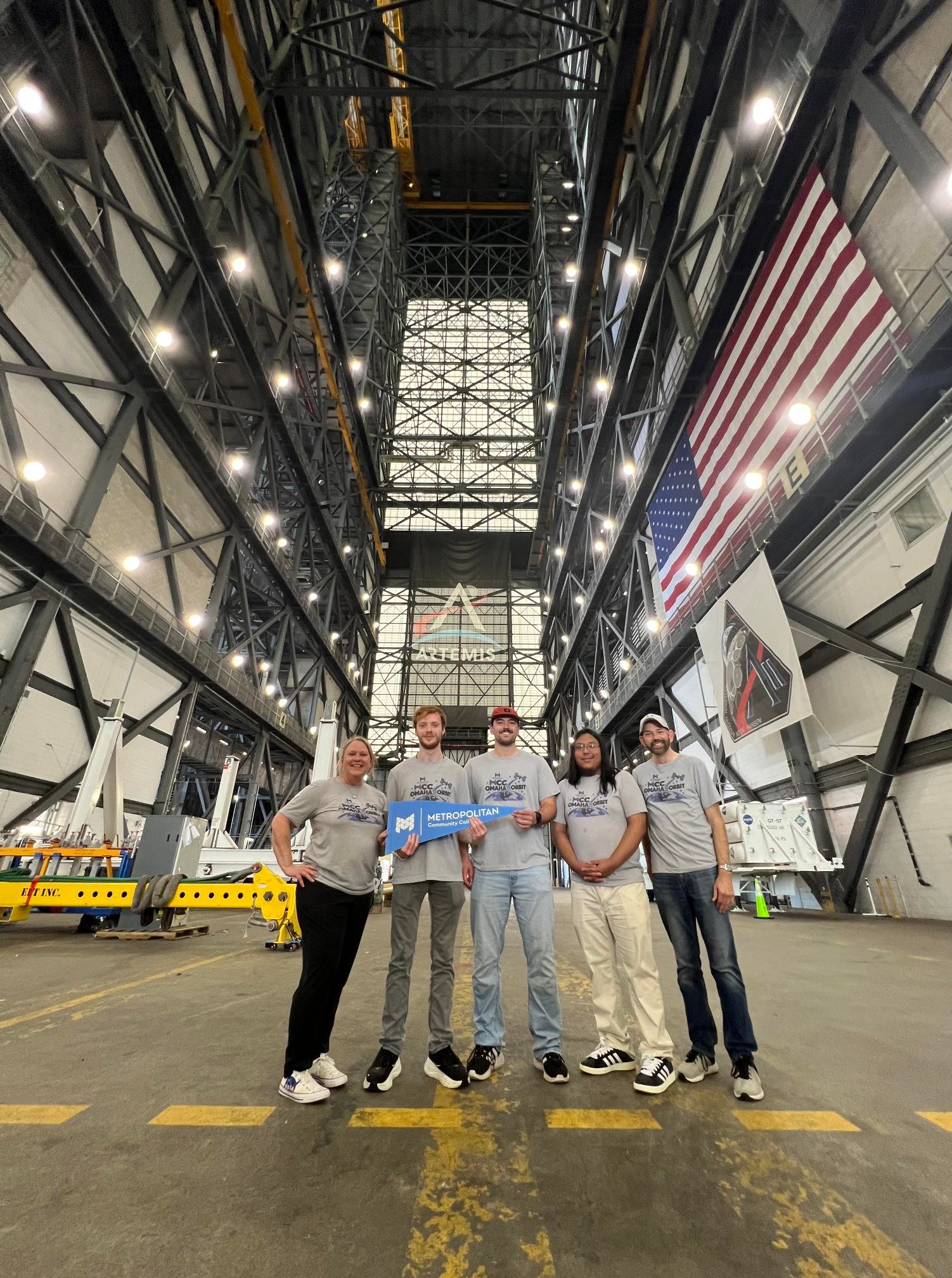
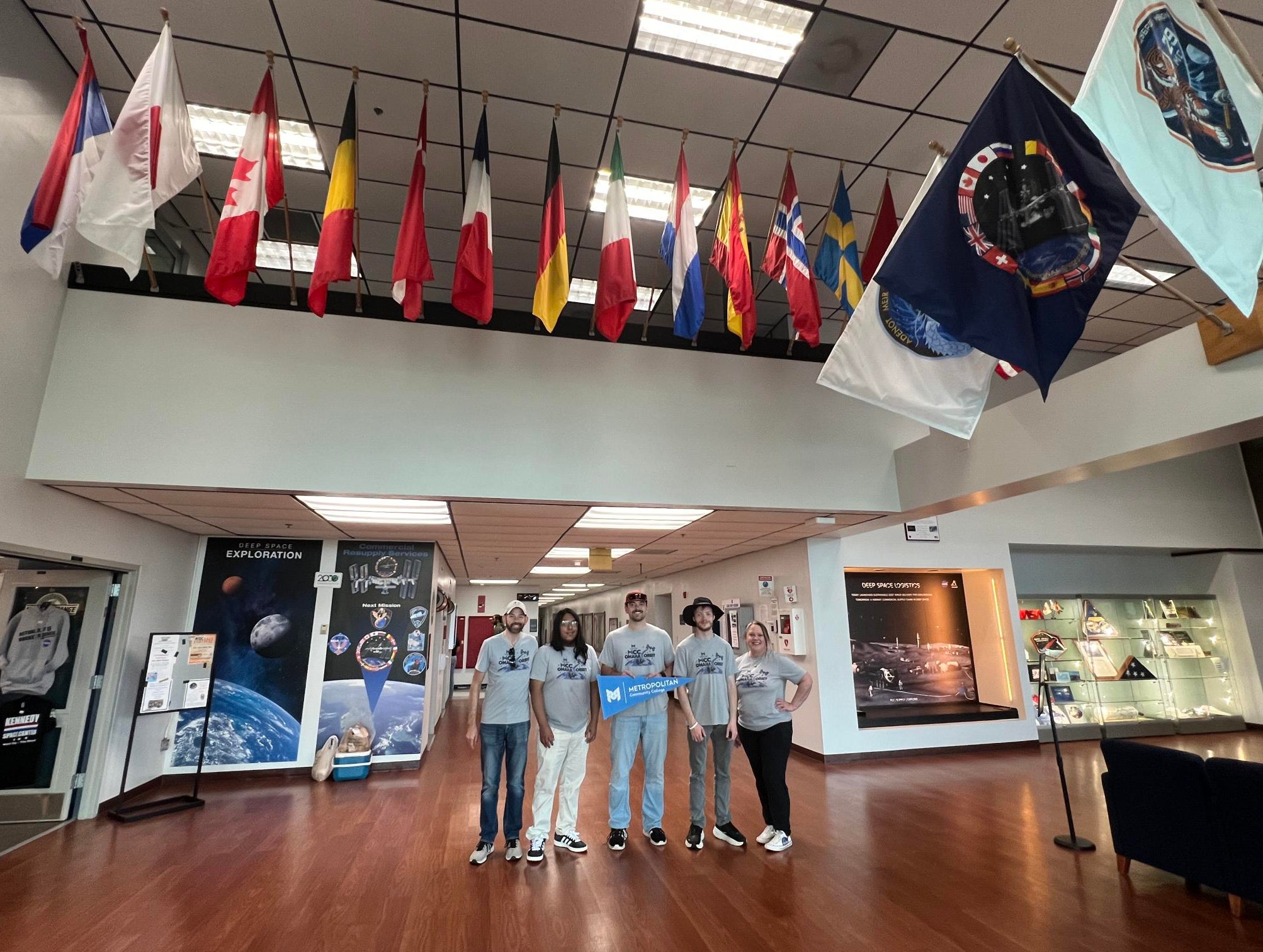
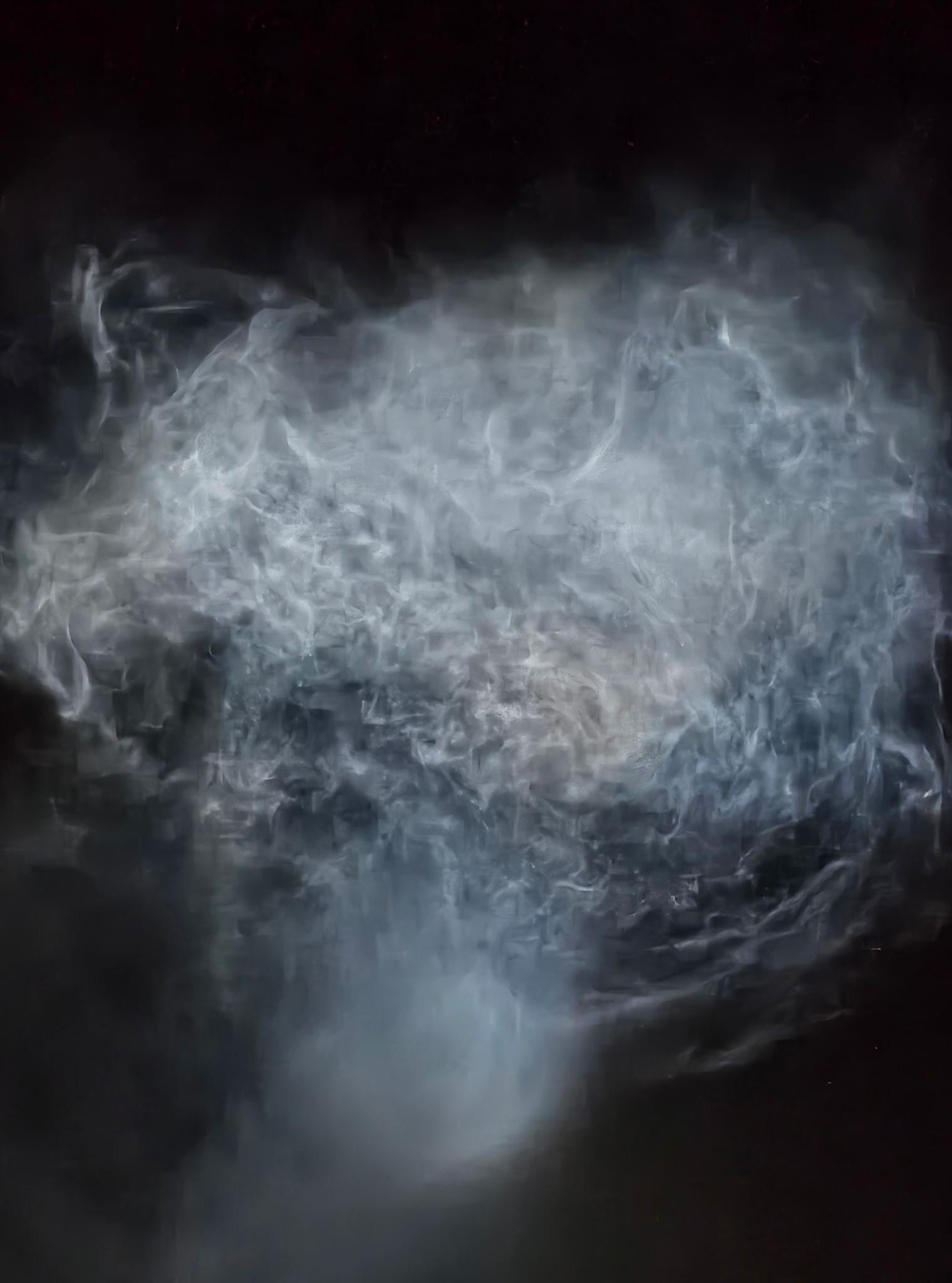
The students' experiment was selected by the National Center for Earth and Space Science Education through the Student Spaceflight Experiments Program, in collaboration with Rhodium Scientific. Their project measures neutron radiation levels near a solar maximum, a period of increased solar activity that can produce phenomena such as the northern lights.
The experiment will remain aboard the ISS before the students analyze the radiation data and share their findings.
The experiment will remain aboard the ISS before the students analyze the radiation data and share their findings.
The project began in fall 2025 in a physics class taught by MCC instructor Kendra Sibbernsen, who encouraged the students to submit a research proposal.
The three were assigned to the same lab group and collaborated on the experiment’s design, researching neutron radiation and methods for measuring it.
"Starting at MCC, I had no idea that opportunities like this existed," Tomjack said. "And I for sure thought that even if they did, I wouldn't be the one to, you know, be able to experience them."
Undergraduate research opportunities are uncommon at community colleges, and opportunities to send an experiment into space are rarer still.
Sibbernsen saw the project as an opportunity for students to explore science beyond the usual classroom curriculum.
"We just want students to participate and play creatively in science ... that's something you don't generally have time to do in class because you're busy getting through curriculum," Sibbernsen said when the experiment was selected.
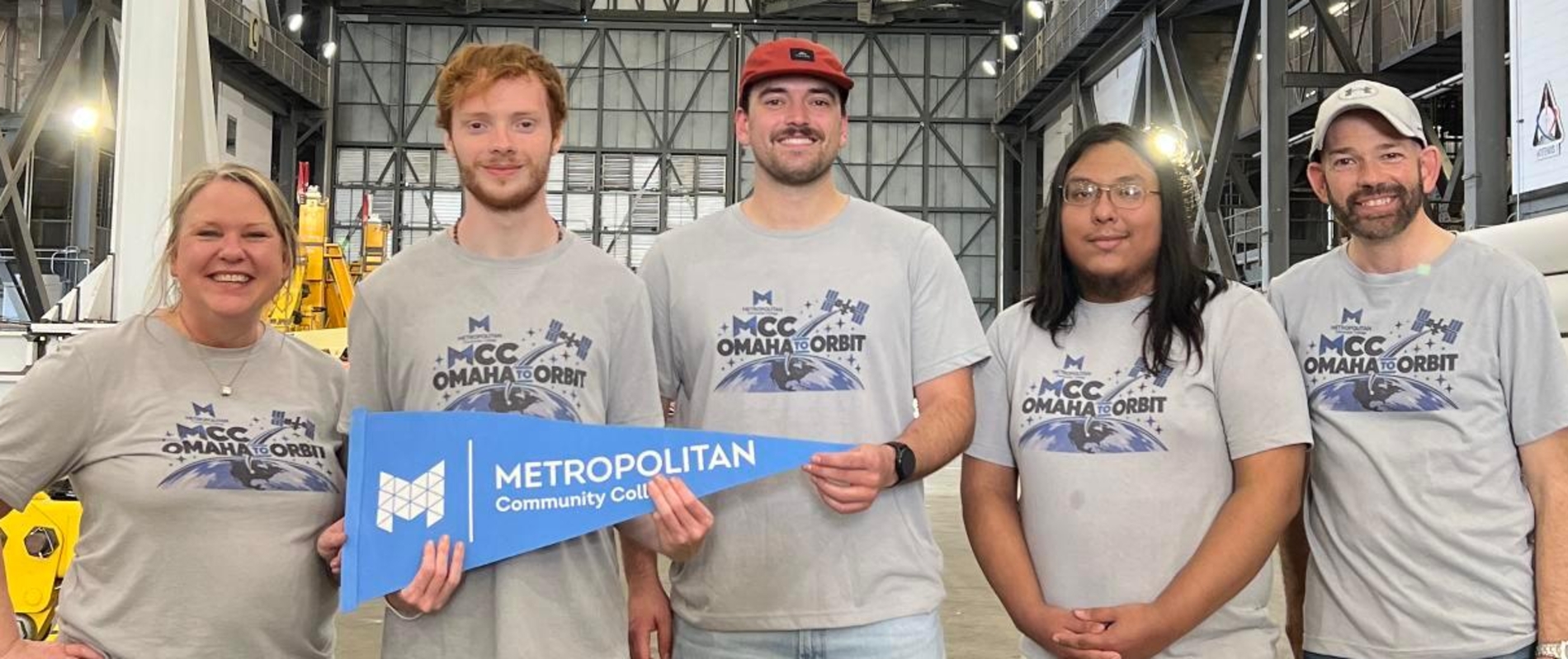
Nearly a year later, the experiment launched toward the ISS aboard a SpaceX rocket. MCC STEM Director Pam Petersen helped make the students’ launch experience even more memorable by arranging behind-the-scenes access to Kennedy Space Center facilities.
“They accomplished something truly out of this world, and I believed that deserved to be celebrated in an extraordinary way,” Petersen said.
Petersen spent two summers working at NASA, an experience that helped shape her understanding of leadership, collaboration and the possibilities created when people work toward a shared vision.
“I wanted our students to recognize the value of their community college experience and show them that MCC students belong in these spaces, too,” she said. “You don’t have to attend a prestigious university to do something extraordinary. Sometimes the journey to space begins right here at a community college in Omaha, Nebraska.”
exploration before the project and hadn't envisioned himself conducting scientific research.
Through the process, he gained knowledge about radiation and solar activity, along with experience developing a research proposal and collaborating with classmates.
A behind-the-scenes look at NASA
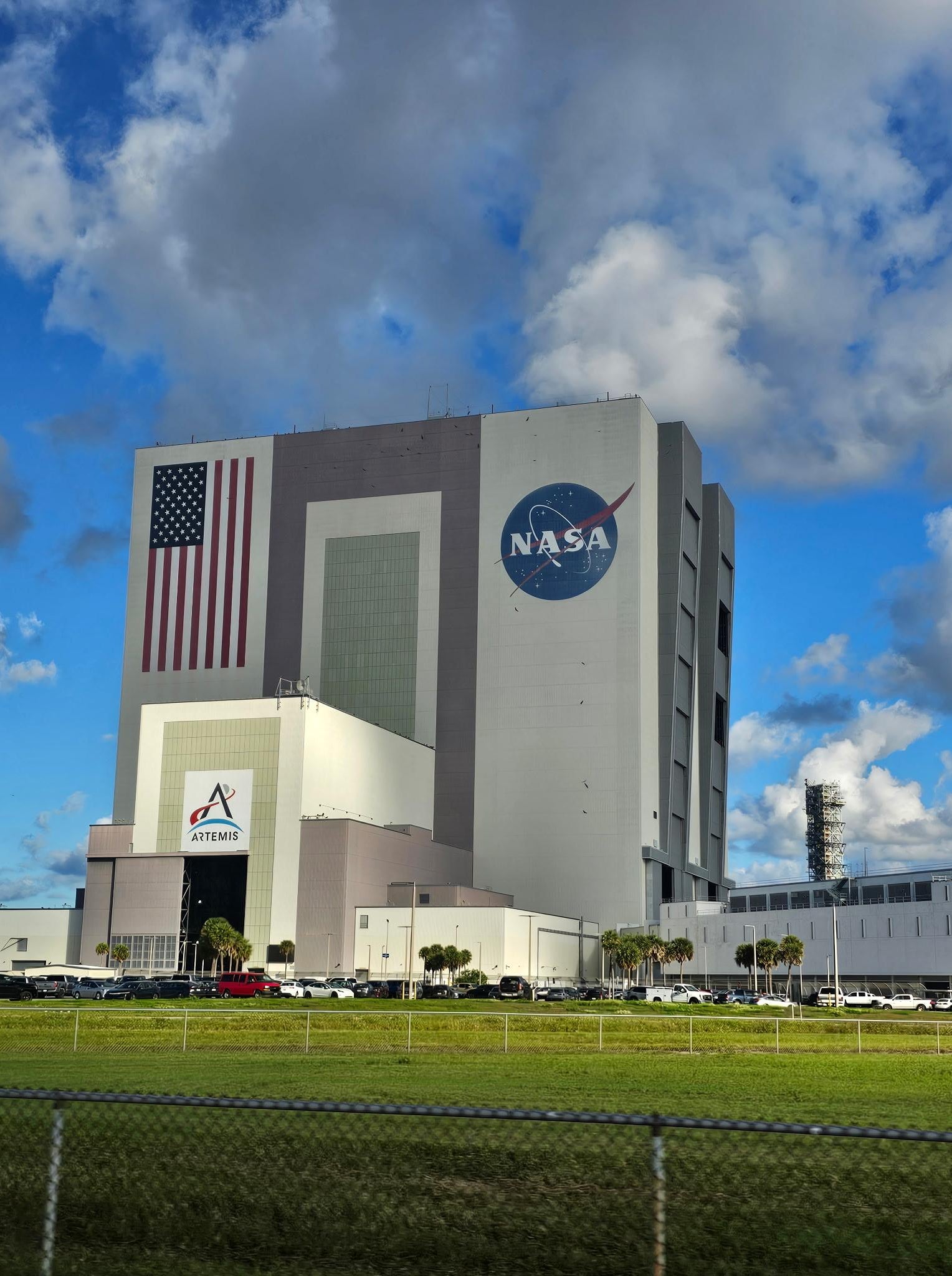
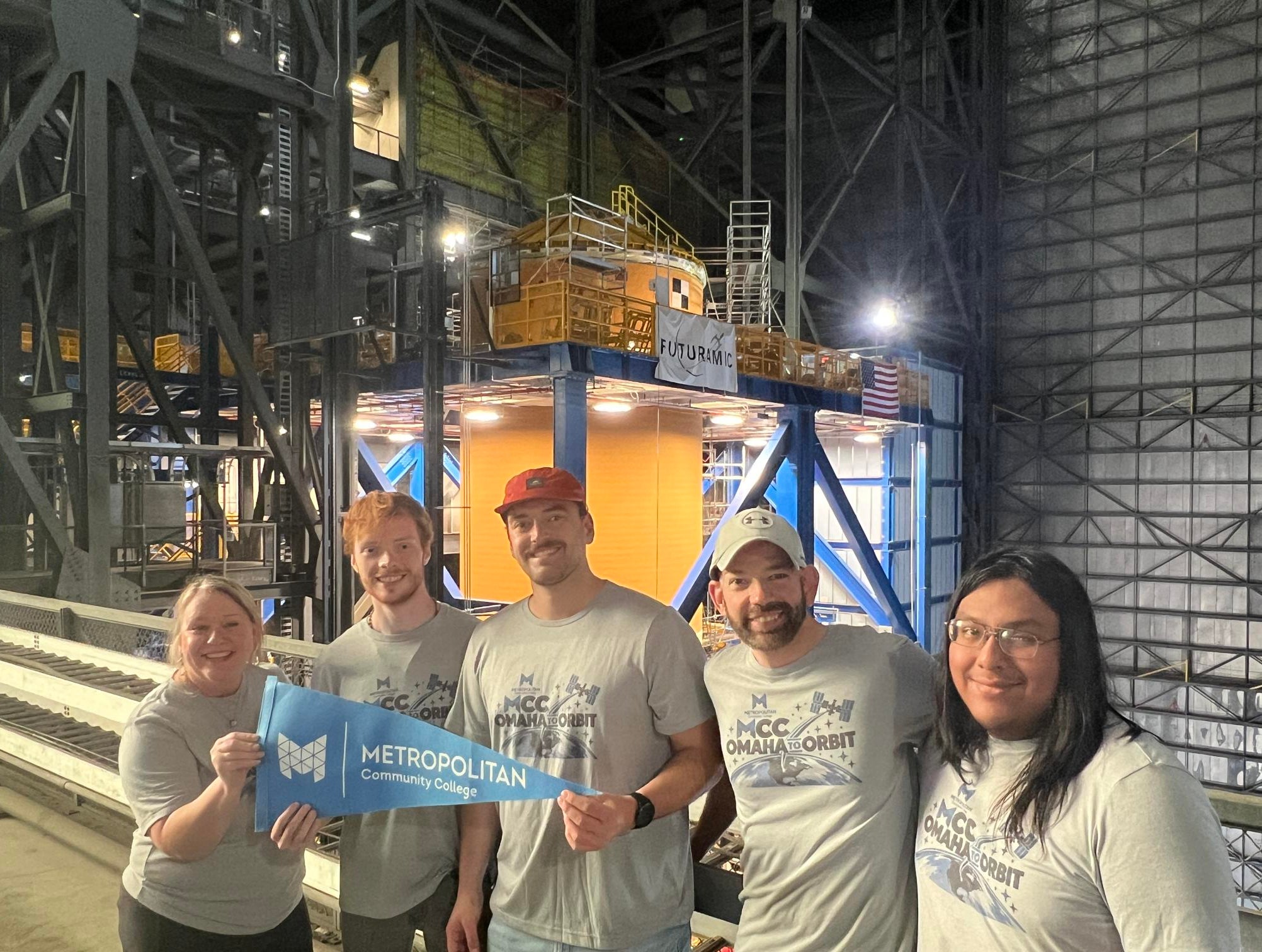
The launch itself was only part of the experience. Students received special access to facilities at Kennedy Space Center, including the Vehicle Assembly Building, the Artemis launch pad and the space station processing facility.
Vanosdall was particularly struck by the enormous Vehicle Assembly Building, where NASA prepares rockets for missions.
He recalled seeing workers examining diagrams and working on rocket components, offering a firsthand glimpse of the people and processes behind space exploration.
For Petersen, exposing students to the wide range of people and professions involved in space exploration was an important part of the experience.
“NASA isn’t just about astronauts and rocket scientists. It takes educators, engineers, technicians, communicators, artists, planners and countless others who make space exploration possible,” Petersen said.
Now studying architecture at the University of Nebraska at Omaha, Vanosdall said the experience broadened his perspective on scientific research and the people working to advance space exploration. The experience changed how he viewed the work taking place beyond the classroom.
“It opened my eyes that every day people are doing revolutionary things … progressing humanity forward, which is pretty cool,” Vanosdall said.
He also credited Petersen for making the trip especially memorable and said the whole experience strengthened his connection to MCC.
"It's nice to have people who kind of ... believe in you," Vanosdall said.
Tomjack has also continued his educational journey since the experiment was selected. He transferred to Front Range Community College in Colorado and plans to attend Colorado State University to pursue civil engineering.
For Tomjack, reflecting on the experience of watching his research project travel into orbit is something he won’t soon forget.
"Something that I touched is in orbit right now. I don’t know how many people on Earth can say that," Tomjack said.